
Blog & Articles
Hospital Alarm Management: 5 Alarm Categories Operations Leaders Need to Coordinate
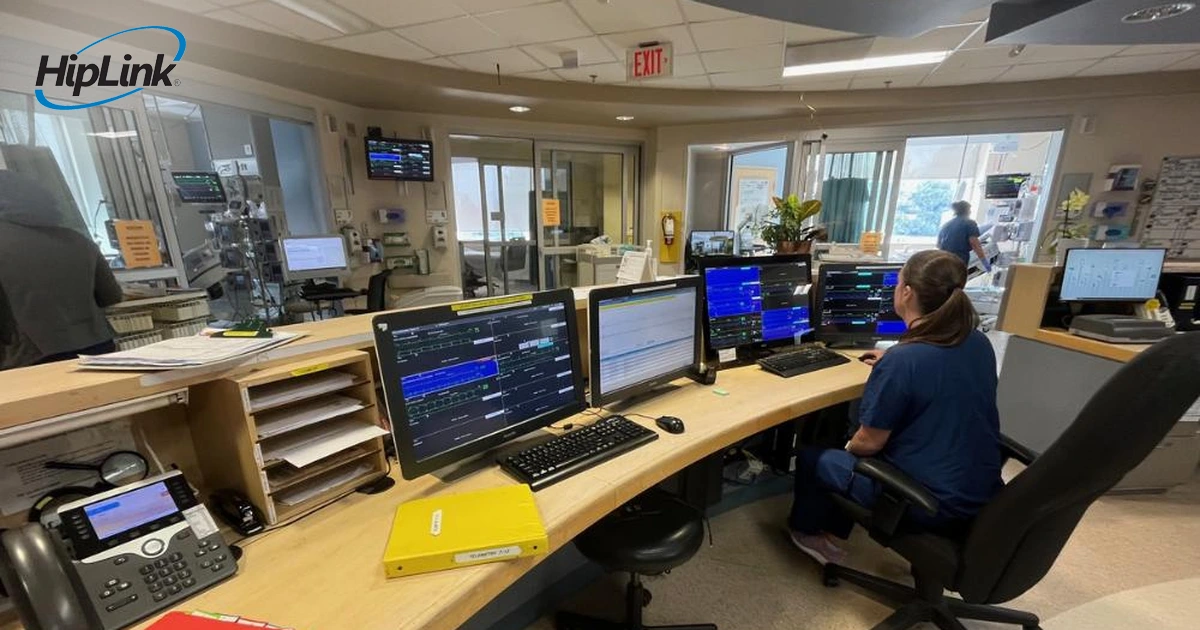
Hospital alarm management becomes difficult long before a hospital runs out of alarms. Events originate in systems owned by different teams: building controls, fire and security panels, nurse call and clinical systems, IT monitoring tools, and maintenance workflows. Each system has its own priorities, terminology, and response path.
When an event remains inside the source system, response may depend on someone watching the correct console or forwarding the information manually. The operational challenge is to decide which events need action, who should receive them, what happens when nobody responds, and what record should remain afterward.
An alarm management program should therefore begin with the type of event and the team responsible for it. HipLink does not replace the systems that detect a temperature change, fire condition, nurse call, or network failure. For supported sources and configured workflows, it can receive the event, apply routing rules, deliver an alert to the responsible role or group, record confirmations, and escalate when required.
Five Hospital Alarm Categories and Their Response Requirements
1. Environmental and facility alarms
Hospitals depend on HVAC, power, refrigeration, medical gas, water, boilers, generators, and other building systems. These systems usually detect their own conditions through building management, equipment monitoring, or control panels. The communication problem begins when the event has to reach someone outside the control room.
A useful facility-alarm workflow identifies the affected asset or location, the condition detected, its priority, the responsible team, and the fallback recipient. A refrigeration warning may go to facilities staff responsible for that unit, while a generator fault may require a different on-call path and a shorter escalation window.
HipLink's facility alarm management capabilities can bring events from supported hospital equipment and building systems into a common routing process. Filtering and prioritization rules can reduce unnecessary distribution, while confirmations and escalation help the operations team see whether someone has taken responsibility.
2. Life safety and security alarms
Fire panels, access-control systems, panic buttons, and other life safety or security systems may involve several hospital teams. The source system detects the event, but facilities, security, emergency response leaders, or other designated groups may also need timely information. Routing should reflect the event type and the hospital's established response procedure, since a supervisory condition should not automatically follow the same path as a confirmed fire event. The message also needs enough context for the recipient to understand the location and expected action without treating the communication layer as the source of record.
Supported connectors can extend selected source-system events to configured recipients. For example, HipLink's Siemens Fire and Building Systems connector can receive configured events from supported Siemens fire systems and route them using predefined groups and escalation rules. Compatibility and event handling should be confirmed for the hospital's specific equipment and response policy.
3. Clinical and nurse-call alarms
Clinical alarms require a different governance model from facility alarms. Nurse-call systems, bedside monitors, and other clinical sources may generate frequent events, but not every event should be extended to another device or wider group. Clinical leadership must determine which alerts are appropriate for secondary delivery, who may receive them, and how assignments and escalation should work.
Where a supported clinical or nurse-call system is connected, routing can reflect the hospital's configured roles, groups, schedules, or assignments. The original clinical system continues to detect and manage the event. HipLink carries the selected alert into the communication workflow and can record delivery, confirmation, and escalation activity.
This distinction matters when hospitals evaluate communication across clinical and operational systems. Alarm reduction begins with governance, source-system configuration, and a clear definition of what requires action. Communication rules then help prevent actionable alerts from being sent broadly or left inside a console that the responsible staff member is not watching.
4. IT and network infrastructure alarms
Hospital operations depend on networks, servers, applications, and interfaces that support both administrative and patient-care workflows. IT monitoring systems may detect a service interruption quickly, but the event still needs to reach the on-call engineer or the team responsible for the affected service. The routing decision should account for priority, service ownership, schedule, and operational impact. A high-priority network incident may require an immediate on-call alert and escalation, while a lower-priority event may remain in the normal service-management queue.
For supported environments, HipLink can connect IT incidents to a configured communication path. The ServiceNow connector, for example, can initiate HipLink alerts from selected ServiceNow records, route them according to configured rules, and associate response activity with the originating workflow. ServiceNow remains responsible for the IT service-management record, while HipLink handles the communication to designated recipients.
5. Maintenance and compliance-related events
Not every operational alert is an immediate equipment failure. Hospitals also manage inspection dates, testing requirements, maintenance exceptions, unresolved work, and other events that may require a responsible person to confirm or complete an action.
These events should not be presented with the same urgency as a fire alarm or clinical alert. They need their own priorities, timing rules, recipient groups, and escalation policies. Some may originate in a maintenance or asset-management system, while others may be initiated by an authorized sender.
When the source and workflow are supported, HipLink can deliver the configured message, request a confirmation, escalate an unanswered alert, and retain a communication record. That record can support operational review, but it does not by itself establish regulatory compliance. Each hospital remains responsible for its documentation requirements, system of record, and applicable standards.
Build the response path around ownership
The five categories differ, but the communication design questions are consistent. Hospital teams need to know which source generates the event, what makes it actionable, who owns the first response, how long the organization should wait for confirmation, and who receives the escalation.
Centralized automated alarm management can apply that response logic consistently. For supported systems, HipLink can filter and format incoming events, route them according to roles or schedules, deliver them through configured channels, track confirmations, and escalate unresolved alerts. The source system still detects and records the underlying condition.
Hospitals should test each workflow under realistic conditions. That includes verifying recipient data, on-call schedules, message content, delivery paths, confirmation windows, escalation targets, and the records available afterward. A technically successful integration is not enough if the routing rules do not reflect how the hospital actually assigns responsibility.
Teams building the broader operating model can also review these hospital alarm management practices, which address governance, prioritization, escalation, testing, and continuous review.
Questions hospital operations teams ask about alarm management
What is hospital alarm management?
Hospital alarm management is the process of deciding how events from clinical, facility, safety, security, and IT systems are prioritized and communicated to the people responsible for responding. It includes routing, delivery, confirmations, escalation, and response records, while the connected source systems continue to detect and manage the underlying conditions.
Does HipLink replace hospital alarm systems?
No. HipLink does not replace a building management system, fire panel, nurse-call system, clinical monitor, or IT monitoring application. It connects to supported sources and coordinates delivery, confirmation, and escalation according to the hospital's configured workflow.
Which hospital alarms can be routed through HipLink?
HipLink can receive events from supported healthcare, facility, life safety, and IT systems through available connectors and interfaces. Compatibility, event data, routing behavior, security requirements, and failure handling should be validated for each source system before deployment.
How do confirmations and escalation differ from alarm detection?
The source system detects the condition. Confirmation shows whether a recipient has responded to the communication, while escalation sends the alert to another designated person or group when the configured response does not occur within the required time.
How can hospitals reduce alarm fatigue?
Hospitals can review which events require action, improve thresholds and priorities in the source systems, suppress duplicates where appropriate, and route selected alerts only to responsible roles. Delivery and response records can then help teams identify workflows that need further adjustment.
Hospitals evaluating these workflows can request a HipLink demonstration based on their alarm sources, recipient groups, delivery requirements, confirmation rules, and escalation paths.